Monday, October 01, 2007

New Radiohead album!

I knew they were up to something!

This appeared on the Radiohead blog today:

Hello everyone. Well, the new album is finished, and it's coming out in 10 days; We've called it In Rainbows. Love from us all. Jonny
Radiohead has been without a recording contract since the last album, and there has been much speculation on what they would do with this new album. Well their sollution is quite radical.

There are two options. Either you chose to download it from the "In Rainbows" site. Hear this: You decide what to pay for it.

Or you order the "Discbox" which includes two cd:s and vinyls, a book with artwork and lyrics, and the download. Price 40 pounds.

So this is Radiohead's bid for the future of the musicindustry then.

Saturday, September 22, 2007

Why Bush Invaded Iraq and How it Went Wrong

Ok, this is a long speach, but it is really the best account of the US occupation of Iraq that I have come across. Naomi Klein deals with the motives for the occupation - military bases and a free market economy - and tells how the Amercan administration did anything but bring democracy to Iraq. They actually fought every tendency towards democracy in Iraq with everything the had.

It's a fascinating story, and it makes one quite angry. Hopwfully it will make some angry enough to act.

Monday, August 27, 2007

Muslim Creationism - A Case of Interfaith Dialogue?

Just as some Christians feel the Theory of Evolution stands in conflict with the Bible, some Muslims feel it is in Conflict with the Quran. This is perhaps not so odd in itself, but I at least was surprised to find out that these groups actually stand in contact with each other.

During a visit to the University of Göttingen in Germany last week, I was given a publication in which Dr. Martin Riexinger tells the interesting story of Turkish Creationism. The history goes back to the 19th century, but gets interesting during the 1980's, when the school books in the (until then?) rigorously secular state schools were modified so that not only were creationism introduced as an alternative to evolution in biology, but fierce anti-evolution polemics was introduced in the books on religious education (a subject introduced at the same time).

The Turkish found inspiration among American Evangelicals, who were often cited as western scientists. The reason that evangelical protestants were noted in Muslim circles in Turkey also had to do with the fact that US creationists repeatedly visited Turkey to look for Noak's ark on mount Ararat. However, the evangelical argumentation for a young earth was of no interest to the Turks, since the Quran does not contain any narrative comparable to that of Genesis regarding the early generations of humans.

Even more fascinating is the fact that the contacts have also gone in the other direction, from Turkey to the US. In 2004, Mustafa Akyol, who teaches an Islamic variation of the "Intelligent Design"-theory, was invited to a hearing at the Kansas Department of Education, at which the question if ID was to be taught in Kansas Schools was discussed. The idea was to bring in a Muslim in order to rebut the argument that ID is based on Christian Theology.

Tuesday, August 21, 2007

Monbiot sums up the Cliamte Camp

Here.

(Note: I will post some religion-relevant material soon, I promise...)

Sunday, August 19, 2007

Heathrow Climate Campaign

So far the protest against the building of a new terminal at Heathrow Airport, London, seems to have gone well. Read the news coverage at indymedia.org. Don't miss this amazing video of a successful non-violent confrontation with the police.

Wednesday, August 15, 2007

Monbiot and Reducing Climate Change


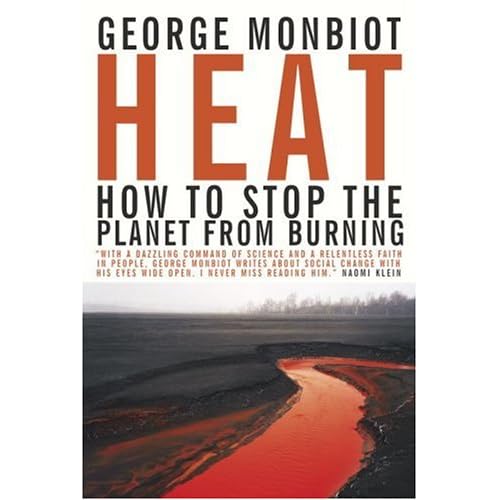
I read George Monbiot's Heat last week (which makes this post very outdated indeed...). Its very good, everybody should read it. The thing is that it deals with how it is possible to, with a decent amount of probability, prevent that global warming goes into the beyond tolerable. It will be hard but doable.

The effect this book had on me is that I now feel ready to act. Monbiot basically shows what needs to be done, now we have to get about doing it. It won't be enough just to change one's own life, we have to start putting pressure on those in power.

Here is a good interview that will give you a good idea about what needs to be done (and why for those of you who do not know that). My favorite line is the one comparing what is required from us to face this crisis compared to WWII.

You say that flying less is a sacrifice too great for the people of this country to bear. But the last time the world was faced with an existential crisis - the rise of the Axis powers - millions of people were asked to sacrifice their lives to prevent it. Now, we are being asked to sacrifice our holidays in Florida and Thailand.

Part 1, Part 2, Part 3, Part 4. (YouTube)

Now, there are some things about which I do not agree with Mr. Monbiot. They are not central to the argument. He essentially says that the controversy over what the scientific position on climate change is cause by people not understanding what science is. This I think is only part of the problem. Climate change reveals problems in the very scientific method itself. It clearly seems to be beyond what is possible for todays scientists to reach a scientific conclusion about the entire phenomenon. All the experts deal with small aspects in which the method works, but it seems that when it comes to compiling all this data it is no longer possible to keep the same methodical stringency. Hence the controversy over IPCC:s reports.

While there certainly does not exist any better tries as assessing the entire phenomenon then IPCC, it is still open to criticism, which sadly is used to prevent the needed the decisions to being taken.

Oxford Patristics Conference

Last week I attended the biggest conference of my academic career, the fifteenth International Patristics Conference in Oxford. For those of you outside the field, this is a conference that is held every four years and had about a thousand scholars from around the globe attending.

It was fun to see the faces of all the people whose books I have been reading, and also the possibility to talk to some of them. Over all the social aspect of the event was what inspired me. To be perfectly honest, I did not find the actual papers and lectures that exciting, except four a couple that have direct relevance for my work. I guess I had hoped for more discussion on methods and the relation between Early Christian Studies and our present situation, which is what I am interested in. Now we had mostly very historical papers from the lesser scholars, while the giants presented overviews and synthesis of ancient thought. Impressive, but not exciting.

However, to meet these scholars was still interesting. Discussions of meals in St Edmund's Hall cover very interesting areas, and here I felt I was not alone in trying to seek contemporary relevance in the early Church. Somehow this interest, clearly present in the people I met, just did not seem to translate into the official proceedings. It was also interesting to see that - generalizing here - to most radical papers came from mostly female scholars of some maturity. There has been for some time a group of great women scholars in patristics, and the same group still is very good. But among the younger presenters, regardless of sex, it seemed people were dealing mostly with quite safe subjects.

This experience of mine could be caused by me not actually attending the right kind of conference, but I do not think this is the case, especially since I so much enjoyed spending time with these people. Rather, I have a feeling many shared my experience, which tells me that the problem seems to be in the general academic atmosphere at the moment, which seems to shy away from the radical and new.

Still, it was a great conference, well organized, and I especially appreciated again to meet my friends and colleagues in the now quite sizable group from the Nordic Countries.

Monday, August 13, 2007

Direct Action against SUV's

A new activist group in Stockholm has today been able to publish an article in one of Sweden's biggest newspapers about why they go around letting the air out of the tires of big 4WD's in the inner city.

A great initiative if you ask me. I would join the group (they call themselves "Asfaltdjungelns Indianer" (a bit difficult to translate that one - asfalt jungle native americans?) if I had the courage.

The article in swedish is here.

Wednesday, June 27, 2007

More on Peak Oil and Climate Change

Here's a good article on the subject, by David Strahan. He discusses why Climate Change campaigners don't want to discuss Peak Oil and vice versa, despite the obvious interdependence of the two subjects.

Peak oil could also sabotage attempts to fight climate change by paradoxically increasing greenhouse gas emissions, if oil depletion forces us to exploit the wrong kinds of fuel. The alternatives to crude oil are all resource constrained and unlikely to fill the gap – at least not in time – but they still have the potential to do enormous climate damage. Burning rainforest and peatlands to create palm oil plantations for biofuels releases vast amounts of CO2, and has already turned Indonesia into the world’s third biggest emitter after America and China.[4] Synthetic transport fuels made from gas using the Fischer-Tropsch chemical process emit even more carbon on a well-to-wheels basis than conventional crude. When the feedstock is coal the emissions double. So in the unlikely scenario that we manage to replace more than half the yawning conventional deficit with coal-based fuel, but not all of it, we would still suffer fuel shortage while emitting even more CO2 than in the current business-as-usual forecast - the worst of all possible worlds.

Thursday, June 21, 2007

Climate Change and Peak Oil

I'm no expert on neither Climate Change nor Peak Oil. However, The more you look into the two issues, I have to say that the more convinced I become that global warming is something we can do quite little about, while peak oil is something that is very real indeed. To be clear, it seems clear that the climate is changing, and that greenhouse gases play a role here (though probably not a decisive one). That we could make decisive changes to the climate in the coming decades by changing our behavior now (short of going cold turkey on fossil fuels) seems improbable.

But, it seems to be clear that energy prices will rise a lot in the coming years and that this will have effects on our lives comparable in gravity to those thought to be caused by climate change.

Still, it is climate change that has become a big issue in politics lately. Now, so far I have been of the opinion that this actually is not so big a problem, because the two problems are so closely related. Most sane actions taken to counter climate change reduces use of fossil fuels.

However, it seems that the politicians really can't do anything right when it comes to the environment. Rather than taking sane actions, like supporting the development of alternative - clean - sources of energy, we see Nuclear Power coming back on a big scale. We hear that it is carbon neutral and safe and clean. Obviously it is none of these things. Energy is used for transports both of Uranium and the waste. It is not safe nor clean: especially the mining of uranium is increasingly messy because it is found in so difficult places. And obviously the waste will be with us forever.

Even worse, the other solution now getting much more political momentum is coal plants that collect the carbon emissions. This is a solution typical of the generation that has always felt that problems out of sight are solved. There are no good solution for storing these emissions, and there are good reasons to believe such deposits will become new environmental hazards.

But putting real effort into developing real renewable energy sources or encouraging people to save energy, that is to much to expect.

The problem here is that future historians - if such will exist - will have a great problem of understanding why we put so much effort into a problem that we was not sure existed while at the same time ignoring a problem plane to see for anyone who cares to look, thus destroying our civilization ourselves.

Wednesday, June 20, 2007

The Yes Men Strike Again

While we're on the oil theme... You might have heard of this already:

June 14, 2007
FOR IMMEDIATE RELEASE

EXXON PROPOSES BURNING HUMANITY FOR FUEL IF CLIMATE CALAMITY HITS
Conference organizer fails to have Yes Men arrested

Text of speech, photos, video: http://www.vivoleum.com/...
GO-EXPO statement: http://newswire.ca/...
Press conference before this event, Friday, Calgary: http://arusha.org/...
Contact: mailto:fuel@theyesmen.org
More links at end of release.

Imposters posing as ExxonMobil and National Petroleum Council (NPC)representatives delivered an outrageous keynote speech to 300 oilmen at GO-EXPO, Canada's largest oil conference, held at Stampede Park in Calgary, Alberta, today.

The speech was billed beforehand by the GO-EXPO organizers as the major highlight of this year's conference, which had 20,000 attendees. In it, the "NPC rep" was expected to deliver the long-awaited conclusions of a study commissioned by US Energy Secretary Samuel Bodman. The NPC is headed by former ExxonMobil CEO Lee Raymond, who is also the chair of the study. (See link at end.)

In the actual speech, the "NPC rep" announced that current U.S. and
Canadian energy policies (notably the massive, carbon-intensive exploitation of Alberta's oil sands, and the development of liquid coal) are increasing the chances of huge global calamities. But he reassured the audience that in the worst case scenario, the oil industry could "keep fuel flowing" by transforming the billions of
people who die into oil.

"We need something like whales, but infinitely more abundant," said "NPC rep" "Shepard Wolff" (actually Andy Bichlbaum of the Yes Men),
before describing the technology used to render human flesh into a new Exxon oil product called Vivoleum. 3-D animations of the process brought it to life.

"Vivoleum works in perfect synergy with the continued expansion of fossil fuel production," noted "Exxon rep" "Florian Osenberg" (Yes Man Mike Bonanno). "With more fossil fuels comes a greater chance of disaster, but that means more feedstock for Vivoleum. Fuel will continue to flow for those of us left."

The oilmen listened to the lecture with attention, and then lit "commemorative candles" supposedly made of Vivoleum obtained from the flesh of an "Exxon janitor" who died as a result of cleaning up a toxic spill. The audience only reacted when the janitor, in a video tribute, announced that he wished to be transformed into candles after his death, and all became crystal-clear.

At that point, Simon Mellor, Commercial & Business Development Director for the company putting on the event, strode up and physically forced the Yes Men from the stage. As Mellor escorted Bonanno out the door, a dozen journalists surrounded Bichlbaum, who, still in character as "Shepard Wolff," explained to them the rationale for Vivoleum.

"We've got to get ready. After all, fossil fuel development like that of my company is increasing the chances of catastrophic climate change, which could lead to massive calamities, causing migration and conflicts that would likely disable the pipelines and oil wells. Without oil we could no longer produce or transport food, and most of humanity would starve. That would be a tragedy, but at least all those bodies could be turned into fuel for the rest of us."

"We're not talking about killing anyone," added the "NPC rep." "We're talking about using them after nature has done the hard work. After all, 150,000 people already die from climate-change related effects every year. That's only going to go up - maybe way, way up. Will it all go to waste? That would be cruel."

Security guards then dragged Bichlbaum away from the reporters, and he and Bonanno were detained until Calgary Police Service officers could arrive. The policemen, determining that no major infractions had been committed, permitted the Yes Men to leave.

Canada's oil sands, along with "liquid coal," are keystones of Bush's Energy Security plan. Mining the oil sands is one of the dirtiest forms of oil production and has turned Canada into one of the world's worst carbon emitters. The production of "liquid coal" has twice the carbon footprint as that of ordinary gasoline. Such technologies increase the likelihood of massive climate catastrophes that will condemn to death untold millions of people, mainly poor.

"If our idea of energy security is to increase the chances of climate calamity, we have a very funny sense of what security really is," Bonanno said. "While ExxonMobil continues to post record profits, they use their money to persuade governments to do nothing about climate change. This is a crime against humanity."

"Putting the former Exxon CEO in charge of the NPC, and soliciting his advice on our energy future, is like putting the wolf in charge of the flock," said "Shepard Wolff" (Bichlbaum). "Exxon has done more damage to the environment and to our chances of survival than any other company on earth. Why should we let them determine our future?"

About the NPC and ExxonMobil: About the NPC and Exon Mobil
About the Alberta oil sands: About Alberta oil sands
About liquid coal: Sierra club on liquid coal

Sunday, June 17, 2007

Expensive Oil

Higher oil prices was supposed to lead to the development of cleaner technology, right. Well, why would the oil industry suddenly develop morals?

Naomi Klein's got the story.

It has become fashionable to predict that high oil prices will spark a
free-market response to climate change, setting off an "explosion of
innovation in alternatives," as New York Times columnist Thomas Friedman wrote recently. Alberta puts the lie to that claim. High prices have indeed led to an R extravaganza, but it is squarely focused on figuring out how to get the dirtiest possible oil out of the hardest-to-reach places. Shell, for instance, is working on a "novel thermal recovery process"--embedding large electric heaters in the deposits and literally cooking the earth.

And that's the Alberta tar sands for you: The industry already contributing to climate change more than any other is frantically turning up the heat.

Thursday, June 07, 2007

Arcade Fire Early Demo

If there is anyone else out there who feels that one classic album (Funeral) and one great album (Neon Bible) and on maybe not so great EP is enough Arcade Fire, do check out these early demo's from 2001. Some of the songs are really good, others rather mediocre, as you would expect from a band like Arcade Fire.

Apparently Mr. Butler went through a C.S. Lewis period at some point, too:

Oh my God, a winter for a year
And I cleaned out the back of my wardrobe for a year
Jackets never turn into branches
Not while you're not here
Winter for a Year

Female Theology Bloggers

I have from time to time commented on how few women feel the need to blog on theology, especially when it is time to create a list of some kind. Well Michael L. Westmoreland-White has gathered together a list of the actually-not-so-few exceptions.

Wednesday, June 06, 2007

Nationalism and Patriotism

There has been some discussion recently in the blogosphere about nationalism and patriotism, and either's relation to Christianity. Read in particular this posts by Michael J. Iafrate (and the follow-up), this post at Vox Nova and this one by Halden.

Coming from a small country like Finland, nationalism and patriotism clearly means something else than in the US, for example. Patriotism here means honoring those that took part in Finland's wars against the Soviet Union, but there is little notion of what Finland should be like today. Very few Finns have any concept of some glory of the Finnish nation, and no idea of any special status of our country compared to others.

Still, as I wrote in my post on Gutierrez last week, there is also an ugly flip side to the comparably weak Finnish nationalism, and this is I think true of all forms of nationalism. Nationalism will be used as an excuse to limit solidarity to our group. I mean, it is natural to have special concern for your family, relatives, the people who live in you home town, because you see them quite often and share much with them. In general we could say that we identify with people we share an experience with.

The problem is that identification with the nation is manufactured. My life resembles that of PhD students in other countries much more than that of a farmer in Carelia or some suit in Helsinki. What binds Finns together is the created common narrative of history taught to us in school and through media. Nothing else.

The point is, national narratives are created by the state ultimately for one purpose. To make it possible for the state to recruit people for the army. (Ok, they are some added "benefits" like shared experience of watching hockey and, but that's about it). This is the historical background to nationalism (to create empires) and it is still true today. Support for a nation's army is strongly correlated to the prevalence of nationalist ideals in that country.

The idea that something has a special value because it is Finnish is fake. One could argue that we need a Finnish culture to withstand "American" culture, but here too nationalism leads us wrong, since the problem is not about creating a Finnish alternative to for example the American, but about creating a local alternative to the global or commercial and upholding cultural diversity in general.

An identity based in real experience do not have sharp borders. The further away from Me we move, we share less experience but we can probably find something that connects us even if we move very far. But manufactured identities draw sharp lines, creates us vs. them scenarios. Finns against Russians, Christians against Muslims, Humans against nature. This is the mindset nationalism fosters. If we avoid nationalism we can learn to recognize what we share rather than what separates us.

(BTW, Our neighbours the Swedes celebrate their national holiday today. Since nationalism is very weak in Sweden (they have not fought a war in almost 200 years) they don't really know what to do on their national holiday. Very refreshing that. Hoppas ni njuter av vädret, vänner!)

Monday, June 04, 2007

Lost in the Flood

There's a new song up on my band's MySpace-site. I'm rather proud of it, so you might want to give it a listen.

We play Springsteen songs. We're not aiming for the note-perfect xerox-copies of the originals but try to play the songs the best way we can. This song I think we succeeded pretty well. It's one of Springsteen's best songs in my opinion with somewhat cryptic but very strong lyrics. Though what he means by "Nun's run bald through Vatican Halls, Pregnant, pleading Immaculate Conception" is anybody's guess.

New Blog of the Month at Theology Blogs

Check out who Lawrence chose.

Thursday, May 31, 2007

Gustavo Gutierrez: We Drink from Our Own Wells

Let's get one thing straight right away: I think liberation theology is great and feel very strongly that all theology needs to be contextual to be relevant. That said, this book didn't do much for me. There are several reasons for this. I am familiar with most of the ideas central to liberation theology, so there were few "new ideas" here. More importantly this really is "spirituality of Latin America". It s not even supposed to be particularly relevant for me.

This is not criticism then, but rather an effort to clarify the major differences between the Latin American outlook of Gutierrez and my North European outlook.

Of course, poverty is a rather abstract thing for me. There is very little poverty in Finland, because we still have a great social security system. It is being torn down as we speak, but still extreme poverty is not something you encounter here. This means that I can agree in principle that God has a preference for the poor, it is not something that has much existential meaning for me.

This does not mean that all is well in the Republic of Finland, because the solution to poverty is not more money, but liberation. People in Finland, too, needs liberation, but not so much from poverty as from the tyranny of the accepted opinion, as one might call it. Sure, people in Finland are free to express their opinion (if they have one), and to live their life in any way (within reasonable limits), but most people still live a rather destructive life, destructive not only for the environment (only USA and some other country (was it Australia?) produce more CO2 per capita than Finland) but also for their own souls.

In a way - and I do not say this to in any way downplay the atrocity of extreme poverty - we are little better off, because most Finns have no idea they are oppressed, because we are oppressed by a system so efficient that it has made itself nearly invisible. Why use violence when there is television? Still, we are forced to live a life centered of producing value for the system, by working way more than is healthy and to put any creativity we still have after what is commonly called education to the service of that same system. What this means is that there is way too little joy in our lives, way too little beauty. Instead of joy we have entertainment.

Surely this is a situation where salvation is deeply needed.

Another thing that is difficult for me with Gutierrez book is that is so much a spirituality of a people. I just cannot relate to that. Here again our situation is so different. If they are a people oppressed by an elite, then we are oppressed in part by the idea of being a people. Nationalism is still strong in Finland, as in the rest of Europe, and it seems to be even worse in the US where it is called patriotism. Nationalism is clearly the most destructive idea in the history of mankind (only religion comes close in the amount of blood shed), and even though we have few wars today in this corner of the world, people still argue with this completely abstract notion of the nation as a basis. For example, we hear people argue that "we" must work so that "all Finns" will have a better life. How about all humans? All lifeforms? Why draw any line based on who belongs to this made up concept the Finnish nation? Well, of course the reason is to make it OK to exploit the others, ow wage war against them if need (such as high petrol prices) arises.

I really like how Gutierrez lifts up death as the central symbol for evil, in part replacing for example sin, that is always transformed into some abstract form of spiritual aids. Death is real; it is there. We can be made aware how poverty (in their case) or compliancy (in our) is death. You do not live when you're working 14 hours a day, be it because you have to to put food on your family's table or because a bigger car seems to be a good idea. That is death. From that we need salvation.

Gutierrez is in this book also concerned with dispelling the idea that liberation theology is merely thinly veiled Marxism. Of course it is not. I doubt anyone who believes that has read this far, but if this is the case, do read the book. For the rest of us, we need to keep on working on a liberation theology of our own.

Monday, May 28, 2007

Another Excuse for not Posting

This time the bass is even audible. Slightly loud in fact.