In spite of a lot of bad press in the early stages of the tournament, Reinhold Niebuhr managed to proceed to the Round of 16. But now he has to face the popular Eberhard Jüngel. Does he have an internet fan-club somewhere who will come in and save his day?
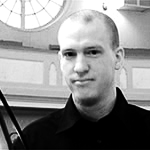
Eberhard Jüngel (b. 1934) is probably best know for his early works God's Being is in Becoming(1965) and God as the Mystery of the World(1975). He has in his theology combined influences as diverse as Barth, Bultmann and Heidegger.
Undoubtedly one of the most influential American theologians of the 20th century, Niebuhr (1892-1971) worked on the relationship between theology and the society. His is famous for his critique fo the so called "social gospel". He is the author of what probably is the most widely used written prayer authored in modern times, the so called "serenity prayer" that is used by the Alcoholics Anonymous and similar groups.
Tuesday, June 27, 2006
Round of 16: Jüngel vs. Niebuhr
Posted by
Patrik
at
2:28 PM
0
comments
Monday, June 26, 2006
Round of 16: Gutierrez vs Ratzinger
For Game 2 of the Round of 16, Gustavo Gutierrez meets Joseph Ratzinger.
Gustavo Gutierrez is the most famous "third world" theologian and the father of Liberation theology. His most well known works are A Theology of Liberation: History, Politics, Salvation and We Drink From Our Own Wells: The Spiritual Journey of A People.
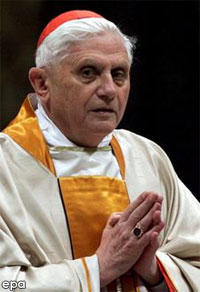
Joseph Ratzinger, Pope Benedict XVI, hardly needs a presentation. Considered progressive, even radical, in his youth, after the Second Vatican Council he is considered to have become gradually more conservative. As a theologian, his most well known work is Introduction to Christianity. It is also well known that Ratzinger is a fierce opponent of the Liberation Theology Gutierrez represents, so this should be an interesting game.
Posted by
Patrik
at
3:23 PM
6
comments
Round of 16: Moltmann vs. Congar
For the first game in the Round of 16 Jürgen Moltmann meets Yves Congar.
Moltmann is most famous for his trilogy: Theology of Hope (1964), The Crucified God (1972), and The Church in the Power of the Spirit (1975). His influence has reached well beyond his own reformed tradition, and is ofthe cited as a major figure in all forms of political theology, regardless of denomination.
Posted by
Patrik
at
3:05 PM
0
comments
World Cup: Round of 16 begins!
In a few hours time I will be posting the two first games in the Round of 16 of the World Cup of Modern Systematic Theologians. Since these match-ups are based upon how the contestants did in the group game, some of the games may be quite easy to predict, but others will be very tight! And from now on the contestants will have no second chances: on loss and you're out of the tournament.
You will be able to follow how the endgame proceeds here, and you can still enter your own prediction of how the endgame will go for a few more hours (more about that here).
For the round of 16 I will post two games a day, and the voting will work as before. May the best man (sigh!) win!
Posted by
Patrik
at
2:56 PM
1 comments
Sunday, June 25, 2006
The Mythology of Science III
Ok, so the title is completely misguiding by now, but I stick to it to show the continuity with the preceeding posts and the discussions caused by them.
What do I mean when I say that evolution, technology and (capitalistic) economy is, respectively, blind, stupid and destructive? Well, I do not mean that they are all utterly useless. Let me clarify.
My point is that society today models a significant part of its selfunderstanding on these three phenomena. We are basing the way we live on an assumption that the progress we see in these areas is somehow representations of a general feature of life, history and culture. In this way we base our morals on these three areas of life. When I say that evolution is blind, technology is stupid and economy is destructive, it is a way of saying that this is not a very wise thing to do.
Someone may say that it is absurd to even attribute some moral value to evolution , technology and economy. Except for in the case of the last (what other purpose could economy possibly have than to serve the quality of life in the most general way of humans?), this is true in one way, but what I'm talking about is how we interpret these pheonomena, and that is a reflection of our morals. The thing is, although evolution does not have morals, it does have an analogy to morals. The same is true for technology and economics.
The "moral good" of evolution is survival and ability to reproduce. An organism that is able to adapt to different environments is supirior to one that can't, and will therefore be mor advanced. Now, there are very different strategies to survival, and it seems that the most sucessful organisms is the most complex (humans) and the most simple (single cell organisms). Insects too, seem to do really well, at least in our garden. Well, anyway, my point is that evoloution is blind, because, it is not moving towards a goal, a perfect organism. It is just changing to adapt to environment. It is not going anywhere.
Technolgy also has its "moral good". It can usually be described with the word efficiency. Most technological advances are made to make some task more efficient. There are some other "values" that guide technology, the most important being the possibility of economic profit, which then makes technology not only stupid but destructive as well. There is also a drive in technology to make the (previously) impossible possible, that is, real innovation. This is a tiny part of all tecnological development, of course, but the most visible, because it is what we see as the "bleeding edge" of the technological development. And here's why it is stupid: There is no inherent mechanism in technology that decides what kinds of innovations are being made. If it is within the grasp of technology it will be invented, regardless of the effects it will have on human life and the environment. Technology cannot see beyond the current stage, and based on a prediction of what its current action will lead to, make decisions of how to act. This is the technological stupidity.
To show that (capitalistic) economics is destructive is very easy, we just have to look at the world. Most of the destruction we see, be it in the form of cut down rain forests, blown up mountains, spreading deserts, climate change and so on, all of it is done in the name of economical growth. And we don't have to look only at the environment, we can look at our selves too: people doing things they do not want to do (work) instead of what they want to do (spend time with family and friends, live in contact with nature, develop their creativity), all because of the demands of economy. Not to mention people pushed beyond what they can take: burn-out, depression, violence. But isn't economy neutral, something that just has been bent ot destructiveness by selfish people? Maybe, but the way capitalistic economy works is so that the selfish people will always make the decissions. (and dont get started about how a communist economy is no better. We all now that. This is not a right vs. left issue.)
There is one more "progress myth" that affects how we look at the world: the fact that individuals grow up. But to base a worldview of this and the three myths described above, to me seems difficult. To base a theory of how life works on three such immoral phenomena can only lead to trouble - in our case in all probability the destruction of our culture, and maybe the world with it.
What theology should do in this situation is what I am trying to work out in this blog.
Posted by
Patrik
at
1:04 PM
7
comments
Friday, June 23, 2006
The Mythology of Science II
Ok, my post last post was brief, and I was very tired when writing it, so that's why it wasn't very clear. Still, your interpretations aren't that wide off the mark.
My point was there are these three areas where there actually is a kind of progress. Evolution is a kind of progress, more complex forms of life evolve from less complex. But it is a blind progress, it is no way to say that later species are "better" than more primitive one's. Or is H5N1 a really good virus?
Technology is something that progresses, we do see new forms of technology being produced all the time. But this progress is stupid, exactly because there is no way to control if new technology actually improves life for humans (let alone the world). Nuclear weapons is only the most extreme example. A much more difficult issue is modes of transportation, cars and planes. They do make our life easier, but at a price we cannot grasp. New media is another issue. The new technology based media is more efficient than older forms, but do they actually make our lives better? Different, yes, but better? Sure those people that blame the new technology for the huge problems caused by stress and burnouts aren't widely off the mark?
Economy does grow in absolute numbers. But this growth too comes at a terrible price. Now, I'm no economist but I know that there is only two ways to create economic value: exploiting resources and labor. These are the only ways real growth is built. Both of these are limited factors, there is only a limited amount of resources on earth and the human being can only put in a certain amount of working hours. When economy, then keeps growing it is destructive, because it is eating up the reserve of resources (oil will not last more than 30 years, probably much less, water is becoming really scarce in some areas already) and are pressuring humans to work over the capacity.
Since these are the only real areas (besides personal growth) where we can actually observe some kind of progress, it is all the more strange that so many still deduce from these blind, stupid and destructive forces some kind of general rule of history (and, as Byron mentioned, morals), that our society will, if we put our trust in progress, will somehow overcome its problems in time.
Now, I want to ask those of you that find my science bashing misguided, to provide one example of how technology, economy, of biology (the last one would be difficult I know, but there is a popular belief in the power of "nature" to take anything we throw at it) have recently come up with something that would make it possible for us to sustain our present way of life without heading for a total destruction very fast. No science fiction please. One example with effects that we see kicking in now.
Posted by
Patrik
at
3:02 PM
7
comments
Thursday, June 22, 2006
The mythology of science
Rev Sam has formulated The foundation myth of science. And very well, too.
The three big progress myths - evolution, technological progress and ecenomical growth - have somehow lead humanity to believe that progress is something natural, something given. The absurdity of this should be clear from the fact that evolution is blind, technology stupid and growth is destructive. Evolution does not go anywhere, technology produces H-bombs as well as cancer medicine, and growth is just a nice word for abuse of resources. Still, our present society lives in the vane hope that unlike all other civilizations in history, ours will continue to prosper forever.
Posted by
Patrik
at
10:44 PM
5
comments
World Cup: Brackets and call for predictions!
Yes, I am still busy, and the round of 16 will not start untill Monday. In the mean time do check out the brackets for the rest of the Tournament! Aren't they nice? Isn't absolutely super-cool that Ratzinger will face Gutierrez in the first round?
What is even cooler is this nifty "predict it" feature that is built into the bracket software. This means that you can now go and predict how the tournament will go, in a very cool and easy way. And then we will se who got closest! To be able to predict you have to registrate with that site (yeah, bummer), but it is easy and they don't spam. However, since they will show the e-mail address you need to provide, you may not want to use you "main" e-mail account.
And how about we make it even a bit more interesting by throwing some bets? Since the hard currency of the blogosphere is links, why don't we pledge that everyone that takes part in the prediction, will link to the person who did the best predictions, in a post saying how nice, clever and cool their blog is, in you own words? (Of course you can predict even if you do not have a blog.)
Of course, the regular voting will take place here as usual, and anyone can participate in that.
Posted by
Patrik
at
2:17 PM
3
comments
St Victorinus of Poetovio
Kevin P. Edgecomb in his biblicalia blog offers a new English translation of the first latin commentary of the Apocalypse, by St Victorinus of Poetovio, composed circa 260. The first part is here.
Posted by
Patrik
at
11:05 AM
0
comments
Wednesday, June 21, 2006
World Cup Results Day 11
Ok, now the Group Game is finished, and we know who has advanced to the Round of 16. But first, the results from the final games.
Group Photius
Final Results:
Eberhard Jüngel - Rosemary Radford Ruether 26 - 9
Joseph Ratzinger - John Hick 29 - 6
Group Standings:
Ebehard Jüngel 9 +33
Joseph Ratzinger 6 +35
----------------------------
Rosemary Radford Ruether 3 -17
John Hick 0 -37
Group Gregory
Final Results:
John Zizioulas - Gustavo Gutierrez 14 - 15
Hans Küng - Edward Schillebeeckx 18 - 10
Group Standings:
Gustavo Gutierrez 9 +7
John Zizioulas 6 +16
------------------------------
Hans Küng 3 +1
Edward Schillebeeckx 0 -24
Group Hilary
Final Results:
Robert W. Jenson - Sallie McFague 22 - 6
Hans Frei - Vladimir Lossky 14 - 12
Group Standings:
Robert W. Jenson 9 +51
Hans Frei 6 +7
--------------------------
Vladimir Lossky 3 -6
Sallie McFague 0 -48
This means that the following theologians have qualified for the Round fo 16:
Colin Gunton
Paul Tillich
Karl Rahner
Reinhold Niebuhr
Jürgen Moltmann
T.F. Torrance
Wolfhart Pannenberg
Henri de Lubac
Hans Urs von Balthasar
Yves Congar
Ebehard Jüngel
Joseph Ratzinger
Gustavo Gutierrez
John Zizioulas
Robert W. Jenson
Hans Frei
6 Germans, 4 Americans, 2 Frenchmen, 4 others. 9 protestants, 6 catholics, one orthodox. That's not so bad. However: 16 males - that's just a discrace. Let's see in 50 or 100 years time... I'm sure the feminist theology movement will be seen as one of the most important trends in theology in the 20th century.
Note: this is not a ranked list. I will give present the brackets for the end game when it begins. However, I have been very busy lately and will be so for the rest of this week (This is also the reason for the lack of "serious" posts on my part). This means the World Cup of Systematic Theologians will go on a short break now for a few days. But be sure to stay tuned for the rest of the tournament, because we have some very tough games ahead of us!
Posted by
Patrik
at
11:52 AM
7
comments
Monday, June 19, 2006
World Cup Results Day 10
Because of a mix up, the last round in group Photius is still open for voting.
In group Ephrem we saw a very tight game between Congar and Boff, but Congar won it with two votes, and joins von Balthasar in the next round.
Group Ephrem:
Final Results:
Hans Urs von Balthasar - David Tracy 17 - 7
Yves Congar - Leonardo Boff 12 - 10
Group Standings:
Hans Urs von Balthasar 9 +36
Yves Congar 6 -5
-----------------------------
David Tracy 3 -15
Leonardo Boff 0 -16
Posted by
Patrik
at
10:42 PM
0
comments
Round 3: Group Hilary
Only Jenson can be sure of a place in the next round here, Frei and Lossky fight for the last slot in the end game!
Posted by
Patrik
at
10:37 PM
0
comments
Round 3: Group Gregory
Zizioulas and Gutierrez will qualify from this group, but who will take the precious first place?
Posted by
Patrik
at
10:35 PM
0
comments
Round 3: Group Photius (corrected)
I made a mistake yesterday, these are the correct macth-up's for the final round in Group Photius.
Posted by
Patrik
at
7:58 AM
5
comments
Sunday, June 18, 2006
World Cup Results Day 9
Group Clemens and (Pseudo)-Dionysios finished up today.
Group Clemens
Final Results:
Wolfhart Pannenberg - Emil Brunner 20 - 2
Henri de Lubac - Gerhard Ebeling 14 - 8
Group standings:
Wolfhart Pannenberg 9 +40
Henri de Lubac 6 +9
----------------------------
Gerhard Ebeling 3 -27
Emil Brunner 0 -25
Group (Pseudo)-Dionsysios
Final Results:
Jürgen Moltmann - T.F. Torrence 16 - 7
Dorothee Sölle - James Cone 12 - 7
Group Standings:
Jürgen Moltmann 9 +52
T.F. Torrence 6 +7
----------------------------
Dorothee Sölle 3 -27
James Cone 0 -32
Posted by
Patrik
at
8:48 PM
1 comments
Round 3: Group Photius
Razinger and Radford Ruether fight for a place in the End game here. Jüngel is already qualified for the next round.
Posted by
Patrik
at
8:43 PM
3
comments
Round 3: Group Ephrem
von Balthasar looks set to proceed to the next round, but will he be joined by Tracy, Congar or Boff?
Posted by
Patrik
at
8:38 PM
3
comments
Saturday, June 17, 2006
World Cup Results Day 8
The two first groups have finished the group tournament. From now on we will now who will leave the tournament, and who will continue the battle for Number One.
In Group Augustine Gunton beat Tillich and managed to win the group. Tillich gets second place and stays in the tournament, but may get tough competition in the next game.
Group Augustine
Final Results:
Paul Tillich - Colin Gunton 10 - 22
John Howard Yoder - Walter Kasper 18 - 13
Group Results:
Colin Gunton 9 +23
Paul Tillich 6 -5
--------------------------
John Howard Yoder 3 -1
Walter Kasper 0 -17
Group Basileios offered little surprise in the last round. Karl Rahner is joined by Niebuhr for the next round. Karl Rahner, arguably one of the theologians of the 20th century that have the most contributed to the increased importance of mysticism in theology showed the anti-mystic Nygren what's what.
Group Basileios
Final Results:
Karl Rahner - Anders Nygren 27 - 3
Reinhold Niebuhr - Mary Daly 25 - 6
Group Results:
Karl Rahner 9 +50
Reinhold Niebuhr 6 +15
---------------------------
Anders Nygren 3 -30
Mary Daly 0 -45
Posted by
Patrik
at
9:21 PM
0
comments
Round 3: Group (Pseudo)-Dionysios
Moltmann and Torrence fight today for the first place in the group, a place that may prove crucial in the next round. Sölle and Cone will probably take some time to discuss their various experiences of fighting oppression and political theology.
Posted by
Patrik
at
7:23 PM
2
comments
Round 3: Group Clemens
Pannenberg has already qualified for the next round and Brunner cannot qualify. But between Ebeling and de Lubac anything can happen, and the winner will get to continue to compete in the tournament.
Posted by
Patrik
at
7:19 PM
4
comments
World Cup Results Day 7
Group Gregory continues to be the group where the western theolgians get beat. Bot Küng and Schillebeeckx lost again and are gone from the tournament. Group Hilary is more interesting: Jenson has his place in the next round secured, but the second slot is still open.
Group Gregory
Final Results:
John Zizioulas - Hans Küng 19 - 13
Gustavo Gutierrez - Edward Schillebeeckx 17 - 12
Group Standings:
John Zizioulas 6 +17
Gustavo Gutierrez 6 +6
Hans Küng 0 -7
Edward Schillebeeckx 0 -16
Group Hilary
Final Results:
Hans Frei - Robert W. Jenson 9 - 24
Sallie McFague - Vladimir Lossky 10 - 22
Group Standings:
Robert W. Jenson 6 +35
Hans Frei 3 +5
Vladimir Lossky 3 -8
Sallie McFague 0 -32
Posted by
Patrik
at
12:39 AM
1 comments
Friday, June 16, 2006
Round 3: Group Basieleios
In group Basileios Karl Rahner is already ready for the next round, but the fighting is firce for the second place in the end-game. All three contestants have the theoretical chance to proceed, although I want to see Daly beat Niebuhr with 31 votes before I believe it.
Note: The voting for yesterday's games will be open for some hours still, so unless you have already voted in those, it is still possible to do so.
Posted by
Patrik
at
5:04 PM
0
comments
Round 3: Group Augustine
Today we start the last round of the group game: 16 contestants have only one game left in the tournament!
In Group Augustine it is already clear that Tillich and Gunton will advance, and that Yoder and Kasper will go home after this game. But who wins the group will be crucial, because the winner will probably get easier opposition in the next round.
Posted by
Patrik
at
4:58 PM
0
comments
Thursday, June 15, 2006
World Cup Results Day 6
Another really intense day today in the World Cup for Modern Systematic Theologians. von Balthasar, who beat Congar easily in the first round had a little harder time with Boff. And the game between Tracy and Congar was really close.
Not as close, though, as the game between Jüngle and Razinger, where Jüngel got off to a very good start, but Razinger soon picked up pace and they were almost neck to neck at one point. However, Jüngel was the one to prevail this time. In other news today, Rosemary Radford Ruther became to first female winner in the tournament.
Group Ephrem
Final Results:
Hans Urs von Balthasar - Leonardo Boff 22 - 9
David Tracy - Yves Congar 11 - 17
Group Standings:
Hans Urs von Balthasar 6 +26
David Tracy 3 -5
Yves Congar 3 -7
Leonardo Boff 0 -14
Group Photius
Final Results:
Ebehard Jüngel - Joseph Ratzinger 16 - 14
John Hick - Rosemary Radford Ruether 6 - 20
Group Standings:
Ebehard Jüngel 6 +16
Joseph Ratzinger 3 +12
Rosemary Radford Ruether 3 +-0
John Hick 0 -14
Posted by
Patrik
at
7:47 PM
1 comments
Round 2: Group Hilary
Another match between two Americans, both with one victory behind them. The winner can be sure of advancement.
Sallie McFague and Vladimir Lossky both lost pretty badly in the first round. Both need a clear victory in this game to have a future in this tournament.
Posted by
Patrik
at
7:24 PM
6
comments
Round 2: Group Gregory
Group Gregory is one to keep an eye on. The sensational losses of Küng (probably one of the most widely read theoligians in our time) and Schillebeeckx leaves everything wide open.
Posted by
Patrik
at
7:14 PM
1 comments
Wednesday, June 14, 2006
World Cup Results Day 5
Here are the results from todays games in the World Cup of Modern Systematic Theologians.
In Group Clemens Pannenberg is ready for the finals, but all the other three still have a chance to stay in the game.
Group Clemens
Final Results:
Gerhard Ebeling - Wolfhart Pannenberg 5 - 26
Henri de Lubac - Emil Brunner 18 - 14
Group standings:
Wolfhart Pannenberg 6 +22
Henri de Lubac 3 +3
Gerhard Ebeling 3 -18
Emil Brunner 0 -7
In Group (Pseudo)-Dionysios, however, there is not much excitement left, to be honest. Moltmann and Torrence will proceed to the finals, although they still have to meet to fight for the positions as group winner.
Group (Pseudo)-Dionysios
Final Results:
Jürgen Moltmann - Dorothee Sölle 29 - 3
T.F. Torrence - James Cone 22 - 12
Group Standings:
Jürgen Moltmann 6 +43
T.F. Torrence 6 +16
Dorothee Sölle 0 -32
James Cone 0 -27
Posted by
Patrik
at
10:09 PM
0
comments
Round 2: Group Photius
I dare predict that we will have some exciting games in this group today. Jüngel, that immensly popular Lutheran with Barthian influences is going up against his Excellency the Bishop of Rome! Now, let's see if the ecumenical attitude among the voters will prove to be just pretty words!
For the second game, we have the only theologian to receive negative votes in the nomination round against Rosemary Radford Ruether. Will we see the first victory by a female theologian? Or maybe Hick isn't that bad after all?
Posted by
Patrik
at
3:13 PM
5
comments
Round 2: Group Ephrem
In the first round, von Balthasar beat Congar with quite a margin, but the game Tracy and Boff was very close. This means that while von Balthasar may have a good chance at winning the group, it is still very much open who will be the second theologian to advance from the group.
Posted by
Patrik
at
3:05 PM
0
comments
What Body?
Do pay a visit to Chris Petersen's Resurrection Dogmatics site and read his latest installment of his critique of my understanding of the Resurrection of the Body. I have responded in a comment, and also below for the sake of future reference. It is a real treat to have someone competently examining one's thoughts. It is very helpful indeed.
First I want to say, as should be apparent from my newer posts (like this one and the ones following it) that I agree about the hope as being the central aspect of all talk about the future existence. My point is that the content of that hope is found, not by trying to create an image of what this life will look like, but by looking at what the Christian faith and the Christian church is like in this existence, because these are typoi of the future world.
Then for some of your remarks: When I say that the bible does not discuss the afterlife in any detail this is not a statement about the amount of sayings about the afterlife but of the quality of them. Here I see a strong tendency in the writers of the NT texts to prefer to say what this life will not be like over affirming things. For example, Jesus says that in the next word people will not marry (Luk 20:35). Jesus says that they will be "like angels, like the sons of God" (do angels have bodies?). Similarly, Paul in 1 Cor 15:35ff merely states that the resurrection body will be different, in the sense that we cannot base our knowledge of those bodies on the knowledge of our present bodies. Finally look at Rev. 21 where the description of the future Jerusalem starts out rather concrete (walls and gates), but gradually moves into the abstract (Pure gold being as pure glass) until finally the picture looses all concreteness and becomes purely abstract (No sun and moon because God will shine, and the lamb will be a lamp). Again I interpret this as a conscious attempt by the NT writers to avoid giving exact images of the future existence, and rather try to remove such images from our imagination.
As for you comment regarding Paul's use of soma in Romans I feel equally perplexed that you can find a literal(?) interpretation of the word more plausible. What does Paul mean when he says that the body is dead because of sin but the spirit is alive, if we take the body literally? This would mean that the body would be dead, without life, a corpse. But clearly this is not the point, because he says that death here means to have the "a mind of the flesh" (v. 6, the Greek is tricky here). Body here seems to have moral meaning. The most plausible interpretation of soma here is precisely the one I proposed, that the body symbolizes a part of our personality that because of sin is "dead", that is turned against our true selves and God. To try to force in a physical body in this text makes it completely incomprehensible. Also, mortal in antiquity did not mean merely something that is subject to death, but it is something that is connected to the material nature of this world, i.e. that which is not spiritual, not true, not essential.
What I do not understand is why a non metaphorical understanding of body is "better" that an symbolical or metaphorical. The body is never merely a body, it always represents something else, this is why it lends itself so well to symbolical language. The only instance when Paul seems to talk directly about the physical body is when he says that flesh and blood will not inherit the Kingdom of God in 1 Cor 15. This to me is non-metaphorical language, this is Paul trying to distinguish between the physical body and body used in a wider sense.
Posted by
Patrik
at
2:54 PM
1 comments
Tuesday, June 13, 2006
World Cup Results Day 4
Round two of the World cup kicked off today with Groups Augustine and Basileios. There were some fairly even games, especially the one between Tillich and Kasper, where Kasper had a good lead early on in the game, but Tillich managed to turn the game around and win rather comfortably. Karl Rahner completelty crushed Mary Daly. In Group Augustine it is already clear that Tillich and Gunton will proceed to the next round, but it can become crucial which of them wins the group, since that will decide who they will meet. In Group Basileios only Rahner can be sure of his place in the end game - all other contestants, including Daly, has the chance to go further.
Group Augustine
Final Results:
Paul Tillich - Walter Kasper 15 - 10
Colin Gunton - John Howard Yoder 15 - 11
Group Standings:
Colin Gunton 6 +11
Paul Tillich 6 +7
John Howard Yoder 0 -6
Walter Kasper 0 -12
Group Basileios
Final Results:
Karl Rahner - Mary Daly 25 - 1
Anders Nygren - Reinhold Niebuhr 9 - 17
Group Standings:
Karl Rahner 6 +36
Reinhold Niebuhr 3 -4
Anders Nygren 3 -6
Mary Daly 0 -26
Posted by
Patrik
at
9:44 PM
0
comments
Round 2: Group (Pseudo)-Dionysios
Moltmann was the big winner in the first round. Let's see how he performs against Sölle, with whom he share many aspects in theology, and maybe some fans too?
Moltmann and Sölle may share some common ground; this cannot really be said about Torrance and Cone. Torrance is known for his barthian theology and his discussion with the natural sciences, while Cone is famous for his Black Liberation Theology. Surely, most will have no great difficulty to chose between the two, but who will get the most votes?
Again: Shift-reload if you see the old polls only.
Posted by
Patrik
at
3:36 PM
2
comments
Round 2: Group Clemens
This looks to be the most even group so far. Ebeling and Panneberg are ahead, but they won the first games with very little margin. De Lubac and Brunner are by no means out of the game yet. It will be all the more interesting to see which of the two Lutheran giants will make it in this game:
Brunner and de Lubac both lost there first games, which means this will be a crucial game for them. The loser can start to pack his bags, the winner still have a shot at advancing.
Posted by
Patrik
at
3:30 PM
5
comments
More on the World Cup
Frank Emmanuel (aka "One of Freedom") at the Freedom Log offers news and updates from the World Cup of Modern Systematic Theologians, as it unfolds. Comments, analysis and interviews with the contestants. Ok, not the last bit, I made that up, but anyway, check out his comments here and here. Also, the Koala Cult of Mary Daly.
Posted by
Patrik
at
1:46 PM
1 comments
Monday, June 12, 2006
World Cup Results Day 3
Focus was on Group Gregory today. Two Western Europeans were up against competition coming from outside the traditional academical tradition of theology. And both lost: Küng to Gutierrez extremely narrowly, while Schillebeeckx to the amazement of many lost big to John Zizioulas.
In Group Hilary, Jenson and Frei both ended up winning comfortably.
Group Gregory
Final Results:
Hans Küng - Gustavo Gutierrez 14 - 15
Edward Schillebeeckx - John Zizioulas 9 - 20
Group Standings:
John Zizioulas 3 +11
Gustavo Gutierrez 3 +1
Hans Küng 0 -1
Edward Schillebeeckx 0 -11
Group Hilary
Final Results:
Robert W. Jenson - Vladimir Lossky 25 - 5
Hans Frei - Sallie McFague 25 - 5
Group Standings:
Hans Frei 3 +20
Robert W. Jenson 3 +20
Sallie McFague 0 -20
Vladimir Lossky 0 -20
In general, I think this tournament needs more non-english speakers participating in the tournament... Spread the word!
Posted by
Patrik
at
8:05 PM
7
comments
Round 2: Group Basileios
The sensation in this group in round one was Nygren's slim victory over Daly. This means she needs at least a tie with the mighty Rahner in this game. Will this be possible?
For the second game Reinhold "One of the worst things that happened to American theology" Niebuhr meets Anders "Who?" Nygren.
Note: you may have to shift-reload if you can't see the new polls.
Posted by
Patrik
at
7:50 PM
8
comments
Round 2: Group Augustine
There was speculation after Round 1 in this group that Kasper's recent remark regarding the ordination of female bishops in the Anglican Communion cost him the victory against Colin Gunton. Let's see how he does against the "ecumenical sceptic" Paul Tillich.
For the second game in the Group we have two of the American contestants: Colin "the worst interpreter of Augustine ever" Gunton and John Howard "the mentor of Stanely Hauwerwas" Yoder. Yoder - and Kasper - have to score points in this game to have a chance at advancing from the group game.
Posted by
Patrik
at
7:40 PM
1 comments
Baptism as New Beginning
What kind of ritual is Baptism? It is something that one goes through only once. It is a ritual that constitutes the beginning of life in the Church.
Baptism, according to Romans 6, is about entering into communion with the death of Christ. By participation in this ritual, "our old self was crucified with him so that the body of sin might be done away with, that we should no longer be slaves to sin— because anyone who has died has been freed from sin." As I have argued in my earlier posts, I understand this talk about the body of sin, as that which hinders us from being who we really are, that which keeps us soul from being free, as it were.
Paul urges the Romans to "count yourselves dead to sin but alive to God in Christ Jesus." It seems that Baptism is about how we look at ourselves. When we go through this ritual we symbolically enter a mode of life that will be full reality only in the coming life. But by going through this ritual - essentially a symbolical death and resurrection - we communicate to ourselves that we want to live as if that life was present already here. The person that lets himself or herself be baptized signals that he or she no longer wants to be part of the "system" as I have called it, those forces that manipulates us to not be ourselves.
Now, to believe that baptism itself would free us from the influences of these forces would be to have a magic understanding of the sacraments (regardless if we say that it is God's grace this change or not). But by going through this ritual we incorporate this belief, this choice to try to separate from the system, into our personality in a way that would not be possible were we just to decide to do so intellectually.
We can thus say that baptism frees the baptized from original sin, but this is not something that is experienced directly, it something that only becomes a full reality in the coming existence. It is also something that the new believer can start to make a reality in this life because of the re-evaluation of motives that the choice to be baptized is (metanoia). When we say that the baptized person receives the gift of the Holy Spirit we say that life for that persons now carry a new meaning that were not there before. Again, by communicating this through a ritual we reach a deeper layer in the personlity.
A couple of notes. 1. This is said of baptizing adults. Although I do not see it as wrong to baptize children, this symbolism is certainly lost to the person being baptized. That is a very unfortunate loss. I understand that a person can "live in one's baptism", that is, infuse a meaning into an act one does not remember, even if one is baptized as a child, it is also clear that the way paeodo-baptism generally is performed this kind of symbolism is rarely present. In fact, it seems that the persons undergoing the ritual of paedo-baptism is not so much the child as the parents. Again, this is ok, and it is certainly an apt time for a ritual, but it is a ritual with a different meaning from that which Paul describes in Romans 6.
2. When I say that baptism removes original sin, I realize that this is a historical sommersault, since at least Augustine argued the other way around: since the Church performes paedo-baptism it has to mean that the original sin (or rather its reatus) is removed in baptism. Now, the concept of a guilt connected to original sin is something I can't find any sense in, and it is very difficult what kind of "body of sin" the newborn can carry around. For the adult, however, this is a easy understandble symbol of al those past choices, one's own and those of other people, that affect future choices.
Posted by
Patrik
at
5:15 PM
6
comments
Labels: decline, sacraments, Theology
Sunday, June 11, 2006
World Cup Results Day 2
Day two saw some exciting games again. The most even game was David Tracy vs. Leonardo Boff: Tracy one with just one vote. Dorothee Sölle also had a good grip on T. F. Torrence, the game was almost a tie after the first twelve hours, but she lost breath during the latter half of the day. Many big names today, and all, except Yves Congar, managed to win with large margins.
Group (Pseudo-Dionysios)
Final Results:
19 - 2 to Jürgen Moltmann
13 - 7 to T.F. Torrence
Group standings:
Jürgen Moltmann 3 +17
T.F. Torrence 3 +6
Dorothee Sölle 0 -6
James Cone 0 -17
Group Ephrem
Final Results:
16 - 3 to von Balthasar
9 - 10 to Tracy
Group standings:
Hans Urs von Balthasar 3 +13
David Tracy 3 +1
Leonardo Boff 0 -1
Yves Congar 0 -13
Group Photius
Final Results:
19 - 5 to Jüngel
5 - 19 to Ratzinger
Group Standings:
Ebehard Jüngel 3 +14
Joseph Ratzinger 3 +14
John Hick 0 -14
Rosemary Radford Ruether 0 -14
Posted by
Patrik
at
9:09 PM
1 comments
Round 1: Group Hilary
East meets West i this game. Will God bless the USA, or will the light come from the East?
Two important representants for two kinds of "post-modern" theology meet in the second game in the group. Frei the narrative theologian and McFague the eco-feminist. Tough choice!
Posted by
Patrik
at
9:41 AM
12
comments
Round 1: Group Gregory
Voting in comments is fun, but too laborous for me. Let's see what it works out like with polls! Do keep up the commenting, though, and maybe you want to check out the comments before you vote?
In the first game of today, two of Rome's worst headaches meet face to face!
For the second game we have the two contestants with the names that would give the most points in Scrabble:
Posted by
Patrik
at
9:24 AM
6
comments
Half Time Standings for Day 2
Group (Pseudo-Dionysios)
Moltmann is approaching a landslide victory over Cone with 14 - 2 so far.
In the other game Torrence has a minimal lead oven Sölle with 8 - 7. This one is still open!
Group Ephrem
Half time standings:
12 - 1 to von Balthasar over Congar
and
6 - 8 To Tracy over Boff
It seems Congars massive pneumatology is no match for von Balthasar's comments on Speyr's visions(?). It is interesting that von Balthasar is so popular in the English speaking world. It is my impression that his leaving the jesuits significantly diminshed is position in Europe...
Group Photius
Half way through the game the standings are:
12 - 5 to Jüngel
and
4 - 13 to Ratzinger
John Hick and Rosemary Radford Ruether ar far behind, but things can still turn around!
Keep voting!
Posted by
Patrik
at
9:01 AM
0
comments
Saturday, June 10, 2006
World Cup Results Day 1
The results from the first day of the World Cup for Modern Systematic Theologians are in. There were a couple of really tight games, and the Pannenberg vs. Henri de Lubac game was todays most exciting, with Pannenberg stealing the victory with only one votes margin. Today's surprise (maybe) was the old Swedish anti-metaphysic Nygren's victory over Mary Daly. Maybe she tried to refuse to let him into her stadium, eh? Today's landslide was Rahner, beating Reinhold Niebuhr 13 to one.
The results for day 1:
Group Augustine:
10 - 8 Winner Paul Tillich
12 - 5 Winner Colin Gunton
Group Standings:
Colin Gunton 3 +7
Paul Tillich 3 +2
John Howard Yoder 0 -2
Walter Kasper 0 -7
Group Basileios:
13 - 1 Winner Karl Rahner
7 - 5 Winner Anders Nygren
Group Standings:
Karl Rahner 3 +12
Anders Nygren 3 +2
Mary Daly 0 -2
Reinhold Niebuhr 0 -12
Group Clemens:
9 - 8 Winner Pannenberg
7 - 10 Winner Ebeling
Group standings:
Gerhard Ebeling 3 +3
Wolfhart Pannenberg 3 +1
Henri de Lubac 0 -1
Emil Brunner 0 -3
Voting has already begun for the next batch of games!
Posted by
Patrik
at
9:00 PM
1 comments
Round 1: Group Photius
See Rules and Instructions.
Ebehard Jüngel vs. John Hick
Rosemary Radford Ruether vs. Joseph Ratzinger
Posted by
Patrik
at
7:48 PM
23
comments
Round 1: Group Ephrem
See Rules and Instructions.
Hans Urs von Balthasar vs. Yves Congar
Leonardo Boff vs. David Tracy
Posted by
Patrik
at
7:46 PM
22
comments
Round 1: Group (Pseudo)-Dionysios
See Rules and Instructions.
Jürgen Moltmann vs. James Cone
T. F. Torrance vs. Dorothee Sölle
Posted by
Patrik
at
7:41 PM
21
comments
Friday, June 09, 2006
Sacraments and Ritual
Traditionally, theologians have disliked the idea of calling the sacraments rituals, at least in the sense that the sacraments have something important in common with rituals in other religions. Since the seventies, however, rituals have become a subject much studied, and because of the increased understanding of what rituals are, it is today nothing radical about calling the Christian sacraments rituals.
One must always be careful when talking about the sacraments, for they are mysteries, and to explain them would be to profane them. What systematic theology can do, beside exploring the historical background and formation of the sacraments, is to offer ways to approach them, what Rahner called "mystagogy", ways to open up the mystery. It is naive to believe that the truth contained in the sacraments is easy or immediate, just because it is not founded on language. Further, systematic theology has to have an understanding of the connection between the sacraments and the Christian doctrine.
I think that an understanding of what a ritual is can be very helpful in a discussion on the sacraments of the Christian Church. A ritual is a formal act that communicates something significant, that is not easily said in words, to the community and to the individual participating in the ritual. A ritual derives its power from repetition, tradition and from esthetic considerations, although to overemphasis the esthetics aspect may also threaten the meaningfulness of the ritual.
In the Christian rituals of Baptism and Eucharist, primarily, as well as other rituals, something very central is communicated to the Church and to the Believer. In a way one could say that these rituals aims at internalizing the Christian faith, to make the faith of the church a part of the personality of the believer. Because rituals always involve the body, they affect very deep parts of our selves, parts that is not reached by reflection or discussion.
This means, however, that there is not really a theology about the sacraments, rather theology as a whole is about reflection on the mystery communicated in the sacraments. It is incorrect to try to establish a praxis of practicing the sacraments based on the intellectual understanding of the dogma, rather, the relationship is primarily the opposite, i.e. the intellectual understanding of the dogma is based on the practice of the sacraments.
Posted by
Patrik
at
8:48 PM
0
comments
Labels: decline, sacraments, Theology
Round 1: Group Clemens
See Rules and Instructions.
Wolfhart Pannenberg vs. Henri Lubac
Emil Brunner vs. Gerhard Ebeling
Half-time up-date:
In an very even match between two giants, Lubac leads with 4-3 over Pannenberg. Anything can happen in this one.
Ebeling has a good grip of the game, currently 2 - 5 to Ebeling.
Final Results:
9 - 8 Winner Pannenberg
7 - 10 Winner Ebeling
Group standings:
Gerhard Ebeling 3 +3
Wolfhart Pannenberg 3 +1
Henri de Lubac 0 -1
Emil Brunner 0 -3
Posted by
Patrik
at
7:27 PM
19
comments
Round 1: Group Basileios
See Rules and Instructions.
Karl Rahner vs. Reinhold Niebuhr
Anders Nygren vs. Mary Daly
Half-time up-date:
6 - 1 to Rahner who seems to have a firm grip of the match.
2 - 4 to Daly, in game that seems to have the audience leaving the stadium before half time...
Final Results:
13 - 1 Winner Karl Rahner
7 - 5 Winner Anders Nygren
Group Standings:
Karl Rahner 3 +12
Anders Nygren 3 +2
Mary Daly 0 -2
Reinhold Niebuhr 0 -12
Posted by
Patrik
at
7:22 PM
17
comments
Round 1: Group Augustine
See Rules and Instructions.
Paul Tillich vs. John Howard Yoder
Colin Gunton vs. Walter Kasper
Half-time up-date:
6 - 3 to Tillich and
2 - 6 to Gunton so far, but a lot can still happen in these games.
Final Results:
10 - 8 Winner Paul Tillich
12 - 5 Winner Colin Gunton
Group Standings:
Colin Gunton 3 +7
Paul Tillich 3 +2
John Howard Yoder 0 -2
Walter Kasper 0 -7
Posted by
Patrik
at
7:16 PM
21
comments
World Cup: Rules and Instructions
I'll post the first few matches shortly. Here is how it will work.
Each match will be active for about 24 hours. I'm sorry that I can't promise to be more exact than that, but I have other things to do, too. I will not close a game before 8 p.m. (20.00) Eastern European Time (GMT+2) the day after it has opened. It will be possible to vote until I officially close the match. After this you can comment the game, but not add more votes.
You can vote on each game one time. At least in the group game, voting will be in comments, so I have no way to be 100% sure you're not cheating. Anonymous votes will not be counted. (So if you want to try to cheat, at least you have to think of an alias.)
I will vote first, to give an example. When you vote, give your vote first for all the matches in the post, in the right order, and then give whatever comment you want to add. You may only vote once, but you may give you best argument for why one should vote for one or the other contestant. Keep it civil, though. You can also chose to vote only on one of the matches.
In the group game, the winner gets three points, the looser none, and a tie gives one point each to both contestants. The "goal difference" may be crucial, not only in the group game, but these will be used to decide who is the winner in ties later in the game. (Not that ties will be very likely...)
You may base your vote on whatever criteria you like. I doubt anyone is familiar with all 32 contestants, but this may be a good opportunity to broaden your knowledge of 20th century theology.
Let the games begin!
Posted by
Patrik
at
4:45 PM
0
comments
World Cup Lineup and Groups
Thanks for all the nominations. Sadly all of the nominated theologians cannot make it to the competition, but then Finland never made it to the Fifa cup, either. I know that some of you will be disappointed that you favourite did not make it, (and that Hick did!), but that's just the way it is... Like fifa, I may be slightly evil, but I'm still in charge here.
Blogger is, as you know, in a bad way, so I am unsure of what this will be like. I hope they clear up the problems soon. Anyway: here are the eight groups for the first round in the tournament. I used some very high tech random generators to create the groups, though I ranked some participants to make it more exciting.
I think we will see some very exciting matches already in the first round! Tomorrow, God and Bloggers servers willing, it all begins!
Group Augustine
Paul Tillich
John Howard Yoder
Colin Gunton
Walter Kasper
Group Basileios
Karl Rahner
Reinhold Niebuhr
Anders Nygren
Mary Daly
Group Clemens
Wolfhart Pannenberg
Henri Lubac
Emil Brunner
Gerhard Ebeling
Group (Pseudo)-Dionysios
Jürgen Moltmann
James Cone
T. F. Torrance
Dorothee Sölle
Group Ephraim
Hans Urs von Balthasar
Yves Congar
Leonardo Boff
David Tracy
Group Photius
Ebehard Jüngel
John Hick
Rosemary Radford Ruether
Joseph Ratzinger
Group Gregory
Hans Küng
Gustavo Gutierrez
Edward Schillebeeckx
John Zizioulas
Group Hilary
Robert W. Jenson
Vladimir Lossky
Hans Frei
Sallie McFague
Posted by
Patrik
at
12:04 AM
7
comments
Thursday, June 08, 2006
Resurrection Dogmatics: The Future Resurrection of the Body: Part I
Chris Petersen at Resurrection Dogmatics has read some of my posts on the resurrection of the body and has decided to use them as a starting point for presenting his own (presumably different) take on the subject.
I better link to it now, before the battle begins! ;)
The Future Resurrection of the Body: Part I
Posted by
Patrik
at
7:47 AM
2
comments
Wednesday, June 07, 2006
Towards a Theology of Maturity?
Yesterdays post, and the discussion that resulted from it made me think again about something that has been bothering me for a long time. It seems that my generation, me included, have lost all sense of what it means to be an adult. I see people around me turning 30, 35, marrying, buying houses and having children, and still spend large amounts of there free time on the latest X-box release, on various absurd hobbies, and in general behaving like kids.
My problem is: I don't know what to think of this. On the one hand we have maybe more free time than any other generation before us. We have time to play. On the other we are working harder, in jobs with less security than before. Maybe we need to do silly stuff in hour free time. My question is, isn't there something a little bit more mature to do than to build model railways, collect stuff (cd:s, action figures, books) and fight virtual monsters in order to relax? Or is this really ok? Maybe the ability to play shows that we have contact with "our inner child" that we are still alive and open like children are.
I think maybe somewhere we lost the meaning of being an adult. As a young person you try to find out who you are. At some point this ceases to be a urgent question. Before, it is my impression, people at this point would start to culture their personality, broadening their influences, growing better at what they do, "acquire virtues" as the desert fathers would put it. We watch TV.
Right... Theology. Errm. I'm not sure where I should go with this. Anybody else sharing my confusion?
I believe the meaning of my life is to acquire greater freedom over my own actions. Not in some hedonistic sense of course, but in the sense that I am really able to do what I understand is the right thing to do. This to me is what Christ represents. This what was he was like at my age. Is there a connection between sanctification and merely growing up?
Posted by
Patrik
at
7:23 PM
7
comments
Tuesday, June 06, 2006
Salvation as Maturing
This is an attempt to clarify my thoughts on salvation, and at the same time a preparation for a discussion on baptism.
I think that one of the most beautiful visions of salvation is the one worked out by Irenaeus of Lyon. To him Adam and Eve were only children in paradise. The fall was not so much a failing to live up to some standard, it was kind of a mistake something Adam and Eve would not have committed if they would have had more time to mature.
Sin caused the to stop growing. Man remained something not fully formed, something that does not really is what it is supposed to be. We have it in us, it's there, the imago of God. But we're a long way off similitudo. Now the question is, what is man supposed to be like? What would Adam and Eve have been like if the had not and sinned and had grown up to adults?
Irenaeus says that it is because of this question God sent his son as the second Adam, who is the true image of God, the True Man, Man as he/she was meant to be. By baptism a healing process starts, so that man starts growing into more similitudo with God. More like Christ. But the process will not be complete in this life, only in the Kingdom of God.
Now, if we take this not so much as a description of history, but as a story that says something about our lives, I think we have a rather good image of how salvation should work out in life. It is a process towards greater likeness to Christ, which is at the same time what we are deeply inside.
This is not a process of changing our personality. It is a process of removing that which hinders us from being who we really are. There is something that hinders us from growing into who we really are.
We are not honest if we just call this something "sin" and leave it at that. We must really address what those things are that hinders us from being who we really are. I have argued in my previous posts that what hinders us is to a large degree the system in society that want to turn us into consumers, and that makes us act in ways that are deeply inhuman. We have built a world which systematically deforms us.
It is from this system we need to be saved. Or rather, from the influence of this system.
Posted by
Patrik
at
5:55 PM
16
comments
Labels: decline, Irenaeus of Lyon, soteriology, Theology
Waching The Tide Come In
Ok, now I am excited! No not byt the "World Cup" (keep those nominations coming!), well, that too, but by the blog by "Rev Sam": "Elizaphnanian - Watching the Tide Come In"
Like me Rev. Sam is a pessimist about the future of our civilization, but while I in this blog focus on how to think theology in this context, Sam focuses more on understanding the decline. He espcially focuses on the coming Oil Crisis (see also here, here and here for the only investment advice you will ever get from me), but there are loads of other posts on where we are goving economically, politically and environmentally. As well as lots of theological comments.
Spend an hour or two there and you will learn a lot. (Don't do it at work, like me, though...)
Posted by
Patrik
at
11:45 AM
3
comments
Monday, June 05, 2006
Announcement: The World Cup of Modern Systematic Theologians
In honor of /protest against that thing in Germany I hereby announce the very alternative World Cup of Modern Systematic Theologians. It will take place right here, at God in a Shrinking Universe. During this event, we will see who is the greatest systematic theologian of the 20th century. Each theologian will battle their ways towards the number one spot, in a series of one-on-one battles. The winners in each match will be decided by YOU, dear Readers, by popular vote.
The Following theologians have auto-qualified (In no particular order):
- Paul Tillich
- Karl Rahner
- Wolfhart Pannenberg
- Jürgen Moltmann
- Yves Congar
- Hans Urs von Balthasar
- Gustavo Gutierrez
- Reinhold Niebuhr
- Henri Lubac
- Vladimir Lossky
- Ernst Brunner
- Jean Daniélou
- Gerhard Ebeling
- Ebehard Jüngel
- Friedrich Gogarten
- John Hick
- Anders Nygren
- Joseph Ratzinger
- Edward Schillebeeckx
- Gustaf Aulén
- Rosemary Radford Ruether
- Mary Daly
- Leonardo Boff
- Hans Küng
- Must be a systematic theologian, or a theologian that has primarily done systematic theology
- Must have been active mostly during the 20th century.
Karl Barth has been disqualified due to illegal use of wissenschafftliche Assistentin. And to make the tournament more interesting.
The tournament will start on June 9th. You have time to nominate theologians until then. Do spread the word.
Now, who will host the bets?
Posted by
Patrik
at
5:53 PM
59
comments
What about the Problem of Pain?
In my series of existential problems some may have wondered why I don't bring up the theodicy. It is after all the big problem when it comes to believing in God. Well, I have a reason for not addressing it in this context. The problem of pain is not a problem that the Christian doctrine has an answer to. Faith may give us ways to deal with it, but no way of understanding it. Suffering is as meaningless to the believer as to the non-believer.
Obviously there is a great mystery in the suffering of Christ which have consequences for the suffering of his followers, but again, this is not an answer to the problem.
Anyway, this is dealt with competently by Byron in his series on the subject. Here's the latest installment: nothing new under the sun...: Theodicy and eschatology III
Posted by
Patrik
at
9:37 AM
10
comments
Sunday, June 04, 2006
Guilt and Salvation
In my last few post I have explored three aspects of human existence and how the problems of Identity, Death and Meaning are overcome in Christian doctrine by the activity of the Holy Trinity. I will now try to say something about salvation by drawing on the ideas explored in these post.
Salvation is an eschatological concept, there is no doubt about that. But this eschatological salvation cannot be known by any other means than by the partial salvation we experience in this life. In this life, faith promises salvation from the forces that tries to destroy our identity, exploit our fears and rob our lives of meaning. In a culture in decline it is not difficult to identify these forces: They are the very same forces that are destroying the planet. What we need to be saved from is the system that turns humans into consumers and that does not value the things that are important to human beings: beauty, truth, relationships, nature, hope. By exploiting these values for commercial purposes they are all destroyed.
It is not possible for a human being to escape this system completely. This is something the ascetics of the early Church testify: When you go into the desert you bring the World with you. We are all part of this system, it exists both outside and inside of us. The salvation that the Christian faith promises is not an escape from the system, it is a way to become independent of it, so that it looses the power over us. This freedom is something we observe in the gospel's portraits of Jesus. He lived in a way that the powers in society could not manipulate him in any way. Not even by killing him.
When we do things that comply with the system we feel guilt. Guilt is the consequence of acts that go against our identity, acts that try to escape our fears (by ignoring them), acts that accept the superficial over the meaningful. The tradition in (western) Christianity to explain guilt in juridical terms is most unhelpful. But guilt understood as what we feel (and I don't mean feel in a superficial way, these are deep feelings) when we betray ourselves is a powerful concept. Understood this way, we can say that Christianity offers salvation from our guilt. Because it is this kind of guilt that the Church teaches that God is willing to forgive us. When you do wrong to you brother, it is you brother you need to ask forgiveness of. But when you betray yourself, you need God.
But salvation is not only the forgiveness of guilt in this sense. It is also the attainment of a new freedom, and for this forgiveness may be a prerequisite.
When talking about salvation in eschatological terms we may get away with abstract notions, but when we understand salvation as something we can experience something of here, we need to be very concrete. We need to address how a Christian person in a real way can be more free from the influences from the forces that control us. This is the purpose of the Church: to help humans in this world become free, because by such acts the Church points towards the future existence.
Posted by
Patrik
at
4:12 PM
5
comments
Labels: decline, eschatology, soteriology, Theology
Pentecost!
Veni Sancte Spiritus, et emitte caelitus, lucis tuae radium.
Veni Pater pauperum, veni dator munerum, veni, lumen cordium.
Consolator optime, dulcis hospes animae, dulce refrigerium.
In labore requies, in aestu temperies, in fletu solacium.
O lux beatissima, reple cordis intima, tuorum fidelium.
Sine tuo numine, nihil est in homine, nihil est innoxium.
Lava quod est sordidum, riga quod est aridum, sana quod est saucium.
Flecte quod est rigidum, fove quod est frigidum, rege quod est devium.
Da tuis fidelibus, in te confidentibus, sacrum septenarium.
Da virtutis meritum, da salutis exitum, da perenne gaudium.
Amen. Alleluia.
Posted by
Patrik
at
11:37 AM
2
comments
Saturday, June 03, 2006
Princess Theology
There is an interesting discussion at Pentecostal Discussion on "Princess Theology", a (for me, anyway) new trend especially among Pentecostals to talk about believing women as princesses (daughters of the King, geddit?), and dress them up accordingly. Jacqui Grey's post and the following discussion offers interesting insights into this phenomenon.
Posted by
Patrik
at
9:24 AM
3
comments
Friday, June 02, 2006
The Problem of Meaning
The Problem of Meaning is closely connected to the problems of Identity and Death. Meaning is about the relationship of the individual to the surrounding world, and this presupposes and Identity. And the question gets much of its gravity in face of death: What it the point of it all when we are going to die anyway?
But meaning is an aspect of life apart from identity and endliness, too. And activity, a relationship, an experience is perceived to be meaningful when it engages our true self. Meaning cuts through our superficiality and moves the core of our personality. When life is meaningful we feel that we are at home in our life, our identity is strengthened.
But when we feel our life is meaningless we have lost sense of who we are. This is why it seems like nothing really concerns us. But it is not only the problem of identity that causes meaninglessness, it is also caused by a culture that does not foster meaning. It is a feature of our culture that in becomes ever more superficial - a trend that is most easily visible in entertainment and media. The trend is paradoxical: nobody really likes shallow entertainment, still it is very popular. This is not (only) about people being hypocritical: it is a tension in our existence in that we at the same time long for meaning and fear it, because meaning requires us to question our identity and our fears. This is not pleasant to do.
Encountering meaning is a very powerful experience. I think most people have this experience, when a conversation suddenly feels important, real, true. Or when one in a relationship suddenly feels that one is more oneself when one is together with this person. And so on.
This is what the Christian tradition calls the presence of the Spirit of God. We encounter it in other areas too, and in very individual ways. Creativity is another example. The Spirit is also the Spirit of Creation. It is present in all those moments when we feel alive.
When the Church believes that this experience in its various forms is the presence of God, it is the affirmation that God is present in our day to day life. The Spirit is not something that is found primarily in worship or when we do other religious things. The Spirit is there whenever we are present in what we do.
In my next post I will try to summarize what salvation is based on how the Christian tradition addresses the existential problems of identity, death and meaning. Then I will move on to how the Christian practice and the activities of the Church brings this salvation to human beings.
Posted by
Patrik
at
5:09 PM
4
comments
Labels: decline, soteriology, Theology
The Way of the Fathers
I like to recommend Mike Aquilina's blog The Way of the Fathers. He blogs mostly according to the Catholic Calendar of Saints, bringing up today's Saint with a bit of biography and some quotations, all excellently done. His perspective is strictly Roman Catholic, but he recognizes that the Fathers are the heritage of all Christians and treat it as such.
Posted by
Patrik
at
3:07 PM
0
comments
Thursday, June 01, 2006
The Problem of Death (Part II)
Part I
We see in the life of Jesus what true freedom means. Perfectly secure in his identity, he does not fear death and is thus beyond the power of all outside forces.
Now, when I say that the purpose of Christian faith is to live life in the same way, I am note merely proposing a kind of imitatio Christi, though it is certainly about this. Faith is not only about imitating Christ, it is also about becoming one with him. I will discuss this further when I address the sacraments.
I think this can be a way to understand what salvation is. It is becoming free from sin, and thus being able to live a life in the kind of freedom that the life of Jesus shows. How is this a victory over death? Paul says in 1 Cor 15: "The sting of death is sin, and the power of sin is the law." The death we are saved from is not the physical death, death in the sense of an end to biological activity in the body, but is death as something we need to fear. When we are freed from sin, the "sting" of death is removed, and what is less is only death as a part of life, and we no longer have to fear it. That Jesus dies without fear, he shows us that death is not something we need to fear, and that by accepting one's being-mortal, one in fact can overcome death already in life. This is how resurrection is something that can be experienced in this life already.
But does not victory over death concern the afterlife? Yes, but as I argued in an earlier post, life after death is not something we can say that much about. But the way we live here is an expression of our hope for the future world. When we live "resurrected" here, without fear of death, and thus free from the forces that try to control us, we are really expressing what our hope is. Here we are not able to realize this freedom completely, but it can be real enough for us to experience what we believe will be perfect in the next world.
This is all very abstract, I know. But maybe it will be clearer what I mean if I discuss these "forces" I talk of a bit more. I have on purpose been very general with this so far.
The point is that the forces that want to control us by triggering our deep fears are the same forces that are destroying our culture and world. These forces are nothing else than the complex system of economical and political institutions that want us to be consumers instead of persons. It is the system that tells us that it is more important to buy products than to care about what the production of these products does to the environment or to the well-being of the people that produce them.
Salvation in Christ is to be able to escape from these forces. It is be able to build one's identity, not on material stuff, but on something much more solid. This is not to say that this is all salvation is, but this is how salvation is experienced in this life. And it points us towards the complete salvation in the next life, of which we are not able to say much.
By the way, such a life, "outside the system", is one that will not be much harmed by the decline of our culture, a least not the economical aspects of it. An identity that is to a large degree built on consuming will risk complete destruction when the possibilities of consumption are dramatically reduced. This is something I want to discuss more in another post.
Exactly how this salvation is experienced is something that is already part of the Problem of Meaning, because it is the Spirit that gives us life.
Posted by
Patrik
at
6:24 PM
1 comments
Labels: Christology, decline, soteriology, Theology
First Letter of Clement
If someone feels the need to brush up on the apostolic fathers, you have the chance to follow Kevin P. Edgecomb's translation of the first letter of Clement, as it progresses (and rapidly so). The first three chapters are here and you can find the following chapters at his biblicalia blog.
Posted by
Patrik
at
2:05 PM
0
comments